What roles are in Dear Passengers?
Official descriptions divide the crew between piloting the aircraft and working inside the cabin. FLEXUS has not announced a fixed class system or a complete role list.
Crew duty guide
Dear Passengers separates the crew between flying the aircraft and keeping the cabin under control. Those jobs are official; a fixed class system, role selection screen, switching rules, and full roster are not.
Confirmed One crew member pilots the plane while other players work inside the cabin, serve passengers, protect cargo, and deal with emergencies. Not announced FLEXUS has not described these duties as locked classes, published a role-selection system, confirmed role switching, or stated the maximum crew size.
| Pilot | Confirmed duty Fly the plane and react to conditions that affect the flight. |
|---|---|
| Cabin crew | Confirmed duty Serve passengers, protect cargo, contain loose objects, and handle onboard trouble. |
| Passenger and cargo choices | Confirmed activity Choose what to carry before takeoff, balancing payout against added trouble. |
| Fixed classes | Not confirmed Official material describes jobs, not a locked class system. |
| Role switching | Not announced No switching method or restriction has been published. |
| Maximum crew size | Not announced Steam lists online co-op without a player cap. |
Start with the wording
The official Steam description says that one crew member pilots the plane while the others keep the cabin together, serve passengers, and deal with whatever goes wrong. Steam's feature list repeats the same split: pilot the plane or work inside the cabin. That is the clearest public answer to the roles question.
It does not prove that players choose a permanent “Pilot” or “Flight Attendant” class. FLEXUS has not shown a class menu, a skill tree tied to a job, role-specific progression, or a lock that keeps cabin crew out of the cockpit. The safest language is therefore crew duties, not character classes.
This distinction matters if you are planning a co-op group. You can expect somebody to fly and somebody to handle cabin problems. You cannot yet assume that the game enforces those assignments, that every player receives a unique specialty, or that a preferred role can be reserved before a session.
Why duties overlap
The public pitch links cockpit decisions to cabin consequences. Turbulence and air pockets throw passengers, luggage, and loose objects around. Riskier passengers and cargo can pay more, but they also create more work. A flight problem may begin in one area and become everybody's concern.
That makes the role split practical rather than isolated. A pilot cannot make the cabin safe alone while actively flying. Cabin workers cannot ignore the aircraft's movement when loose cargo and passengers react to it. The game is built around sharing attention, warning teammates, and deciding which problem deserves help first.
Official sources do not describe damage meters, failure timers, revive rules, or formal task ownership. The relationship above comes from the published premise: the aircraft, passengers, cargo, weather, and crew occupy one connected physical situation.
Cockpit duty
The pilot owns the flight path, but the exact depth of the controls remains unknown.
The pilot flies the aircraft while the rest of the crew works behind the cockpit. Official footage shows a first-person cockpit with a control panel, yoke, levers, warning lights, and a view through the windscreen. That establishes a hands-on presentation, not a complete flight model.
Weather is part of the pilot's workload. Steam confirms dynamic weather, turbulence, and air pockets. FLEXUS has also described examples such as lightning damage and a bird entering an engine. A pilot may need to keep the plane moving while the cabin reacts to the same event, but no published source explains navigation, takeoff and landing procedures, fuel, autopilot, checklists, or how forgiving the controls will be.
If you normally avoid flight simulators, there is not enough evidence to decide whether piloting will feel simple or technical. The game's comedy and physics focus suggest accessibility, but tone is not a control specification. Wait for the public demo, an official controls video, or a detailed Steam update before treating piloting difficulty as settled.
All five remain open. They are practical demo questions, not hidden features that can be read from a few seconds of trailer footage.
Cabin duty
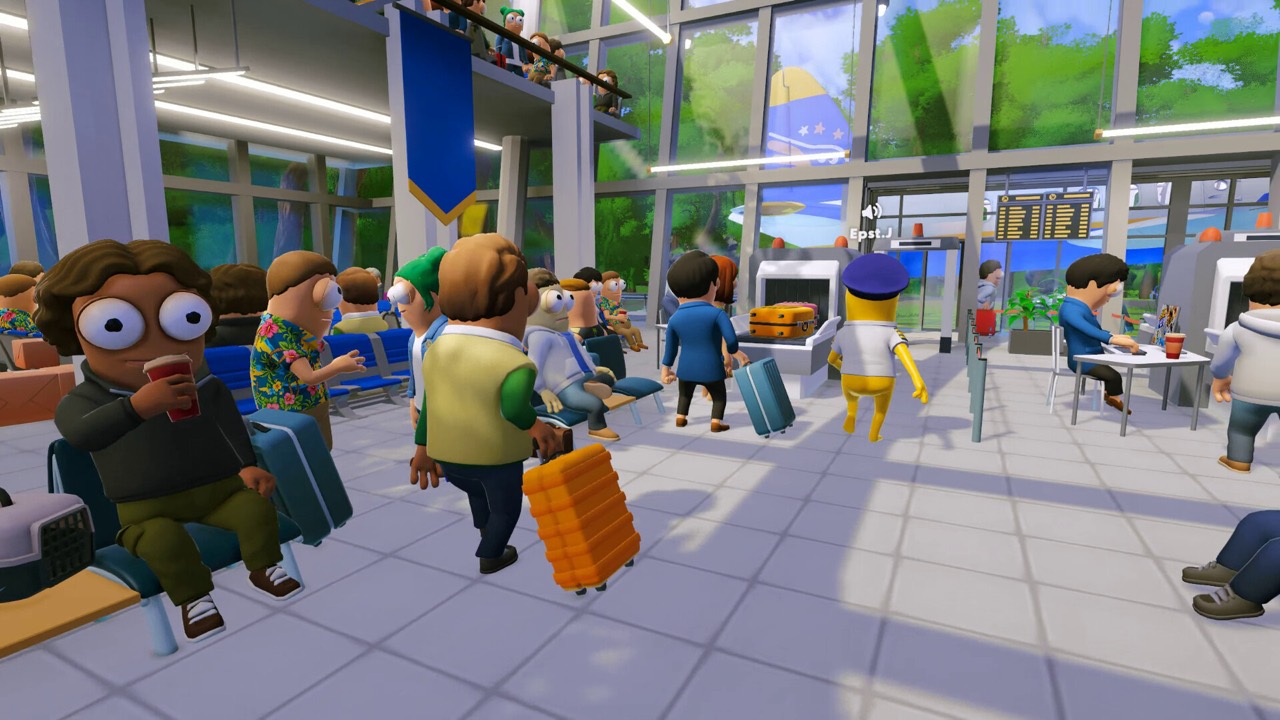
Cabin workers serve food and drinks, keep passengers under control, protect cargo, and respond when trouble escalates. Those duties are named directly on Steam. The public screenshots and trailers also show players moving through passenger spaces and interacting with the aircraft during emergencies.
Passenger service is not presented as a separate peaceful mode. Passengers expect food, drinks, and a smooth flight while the plane is exposed to turbulence and other problems. A cabin worker may be trying to satisfy a passenger just as luggage starts moving or a more serious failure demands attention.
Cargo is another source of pressure. Before takeoff, the crew chooses passengers and cargo. Higher payouts usually come with more trouble, according to the store description. Some cargo is harder to handle and some passengers are harder to please. The choice changes the risks the cabin team accepts before the aircraft leaves the ground.
Emergency work
Steam tells players to stop one problem from becoming a full disaster. It also says that not every solution is elegant and not every passenger stays onboard. That language supports a flexible emergency role: identify the most dangerous situation, contain it, and protect whatever can still be saved.
The official material does not publish a repair job, medic class, security class, or cargo specialist. Repairing damage, controlling passengers, and securing the cabin may become informal assignments among friends, but they should not be advertised as separate confirmed roles.
This is where co-op communication is likely to matter most. A cabin worker can tell the pilot that turbulence is making a problem worse, ask another player to watch the passengers, or shift attention from service to cargo. That is a sensible way to organize the confirmed jobs; it is not evidence of a built-in command system or voice feature.
Group planning
Use this as a conversation starter for your group, not as a confirmed meta.
Online co-op guarantees that at least two people can play together, but the maximum player count is still unknown. A simple plan can work at any supported size: one person keeps primary attention on the aircraft, while everybody else divides the cabin's immediate needs. The split should stay flexible because the published mechanics are designed to create overlapping emergencies.
Before a route, discuss who wants to fly and who prefers physical cabin work. When selecting passengers and cargo, agree on how much extra trouble the group is willing to accept for a larger payout. During the flight, use short calls that name the problem and location: passenger issue, loose cargo, visible damage, or cockpit warning. That advice follows the game's confirmed task dependencies without pretending FLEXUS has published an optimal strategy.
A cabin crew can then use three practical priorities. First, stop a problem that threatens the whole aircraft. Second, secure loose passengers or cargo before turbulence multiplies the damage. Third, return to service requests and lower-risk tasks. The real game may reward a different order, and the demo may reveal meters or failure conditions that change it. Until then, priority-based communication is more honest than a detailed build guide.
Avoid assigning permanent specialties too early. If the final game lets players move freely, a rigid plan could waste time. If roles are locked, the selection screen will make that clear. In either case, the public build—not an unofficial roster—is what should decide how your group organizes itself.
Single-player
Steam lists single-player, so Dear Passengers is not online-only. FLEXUS has not shown how one person handles both flight and cabin responsibilities. There is no confirmation of AI crew, automated flying, direct character switching, paused task management, or a reduced solo workload.
That missing explanation matters more than the simple single-player label. A solo player needs to know whether the game changes the route, removes some emergencies, provides helpers, or expects rapid movement between jobs. None of those answers is available yet.
If solo play is your main reason to buy, wait for a dedicated solo demonstration or the public demo. The listing confirms access to a single-player mode; it does not tell you whether that mode preserves the same systems or how comfortable it is without teammates.
Role freedom
Role switching is not announced. The footage shows first-person movement and interaction, but edited scenes cannot prove that any player can take any station at any time. They also cannot prove the opposite.
Look for three pieces of evidence when FLEXUS shows more gameplay: a role-selection screen, an uninterrupted handoff between crew members, or a written explanation on Steam. Any one of those could clarify whether assignments are fixed, chosen per route, or entirely informal.
Until that happens, choose the game for its broad crew premise rather than a specific promised position. Piloting and cabin work are real parts of the pitch. Your ability to reserve, level, or freely switch those jobs remains unknown.
What to verify next
These are the details worth checking when public access opens.
The demo status guide tracks access. Do not download builds from unofficial mirrors while the public demo remains unavailable.
Source register
Descriptions are separated from trailer observations so visible action does not become an invented feature.
| Official Steam listing | Confirms the pilot-versus-cabin split, passenger service, cargo choices, physics, weather, single-player, and online co-op. |
|---|---|
| Official reveal trailer | Shows the cockpit, cabin movement, passenger trouble, and physical emergencies; it does not explain fixed roles or switching. |
| Confirmed features guide | Keeps published store facts separate from details visible only in edited media. |
Passenger questions
Short answers for choosing a job before more gameplay is published.
Official descriptions divide the crew between piloting the aircraft and working inside the cabin. FLEXUS has not announced a fixed class system or a complete role list.
The pilot flies the aircraft and deals with weather-related flight trouble while the rest of the crew handles the cabin. Detailed controls and cockpit procedures are not announced.
Cabin workers serve passengers, protect cargo, control loose objects, and respond when onboard problems escalate.
Role switching has not been confirmed. Public footage shows crew members moving around the aircraft, but it does not establish a switching system.
Steam confirms single-player, but FLEXUS has not explained whether solo play uses AI crew, automation, direct character switching, or a different workload.
Online co-op is confirmed, but the maximum player count and maximum crew size have not been announced.
Continue briefing
Move from crew duties to the broader loop, online limits, or the playable build.