Play during the layover
Games like Dear Passengers: 4 co-op chaos picks
Each game shares one part of Dear Passengers: airline service, a crew inside one vehicle, physics-driven teamwork, or cascading emergencies. None is an exact clone.
Start with Spacelines from the Far Out for passenger service and airline management. Choose RV There Yet? for shared-vehicle physics, PEAK for first-person slapstick teamwork, or Barotrauma for deeper crew roles and system failures.
This is a practical comparison of games to play while waiting for Dear Passengers, not a ranking or a claim that any pick recreates its full cockpit-and-cabin design. The Dear Passengers side of each comparison comes from the confirmed features guide and the trailer breakdown, so unannounced systems stay out of the recommendations.
Side-by-side manifest
Compare players, modes, and shared mechanics
Player and mode details below come from each game's official Steam listing, checked July 21, 2026.
| Spacelines from the Far Out | Setting: an airline in space. Total players: 1–4; solo supported. Online / local: online co-op and shared/split-screen co-op. Overlap: passengers, service, ship systems, and random incidents. Main difference: a space-airline management game rather than a first-person aircraft crew game. |
|---|---|
| RV There Yet? | Setting: a hazardous trip in one shared RV. Total players: up to 4. Online / local: online co-op; local co-op is not listed on Steam. Overlap: vehicle maintenance, a physics winch, and coordinated problem-solving. Main difference: a ground-vehicle journey without airline passengers or cabin service. |
| PEAK | Setting: a first-person mountain climb. Total players: solo or up to 4 total. Online / local: online co-op; local co-op is not listed on Steam. Overlap: physical comedy, first-person teamwork, and mistakes that affect the group. Main difference: climbing and survival replace vehicle operation and passenger service. |
| Barotrauma | Setting: a submarine beneath the ice of Europa. Total players: single-player or online co-op for up to 16. Online / local: online co-op; local co-op is not listed on Steam. Overlap: six crew roles, vehicle systems, repairs, and cascading crises. Main difference: a much darker, deeper survival simulation with larger crews. |
The table uses conservative overlap instead of vibe matching. Spacelines from the Far Out is included because it has airline service, passengers, ship systems, and incidents. RV There Yet? is included because it puts up to four online players around one troublesome vehicle, with maintenance and a physics winch. PEAK is included because it is first-person co-op built around physical mistakes and shared consequences. Barotrauma is included because it has specialized crew roles, vehicle systems, repairs, and cascading emergencies.
Those overlaps do not make any of the four a replacement for Dear Passengers. The confirmed Dear Passengers pitch combines a flyable aircraft with cabin service, risky cargo, weather, and loose-object physics. Each released game covers one slice of that pitch more clearly than the others. If FLEXUS later confirms more details, especially player count, route structure, progression, or demo scope, this comparison should be tightened rather than padded with guesses.
Pick by priority
The best match for each part of the pitch
Dear Passengers combines several ideas. Choose the game that matches the part you care about most.
- Airline and passenger service: Spacelines from the Far Out is the closest fit, with routes, customer needs, ship systems, and emergencies for a crew of up to four.
- Shared-vehicle physics: RV There Yet? puts up to four online players around one unreliable vehicle, where the winch and repairs make coordination the main event.
- First-person co-op comedy: PEAK focuses on physical movement, improvised teamwork, and group consequences without the management layer.
- Specialized crew jobs and crises: Barotrauma offers the deepest systems comparison, but its submarine survival tone is far less playful.
If the airline theme is the main draw, Spacelines from the Far Out is the cleanest stop because its official listing already centers passengers, routes, needs, and crew service. It is also the only pick here whose premise naturally overlaps with running a passenger transport business. Its main distance from Dear Passengers is perspective and structure: the comparison is about service pressure and airline mishaps, not first-person aircraft piloting.
If the appeal is one group trapped with one unreliable machine, RV There Yet? is the more direct comparison. Its Steam page emphasizes online co-op, a shared RV, a winch, maintenance, and coordinated travel through hazards. That matches the shared-vehicle pressure in Dear Passengers without implying the same setting. There are no airline passengers, no cabin service layer, and no public basis for treating it as a cockpit comparison.
If what matters is slapstick movement and group failure, PEAK fits better than a management game. Its official listing covers solo play, online co-op up to four, and first-person climbing where players' physical decisions can help or harm the group. The overlap is tone and embodied teamwork, not systems. It should not be used as evidence for Dear Passengers progression, inventory, or route design.
If the draw is deeper crew specialization, Barotrauma is the biggest systems reference point. Its Steam page confirms single-player, online co-op up to 16, six crew roles, repairs, and submarine systems. It is also the furthest away in mood: darker, harsher, and more simulation-heavy than the physical-comedy aircraft pitch FLEXUS has shown. Pick it for crew crisis depth, not for airline service.
Why these four
Each pick overlaps with a confirmed mechanic
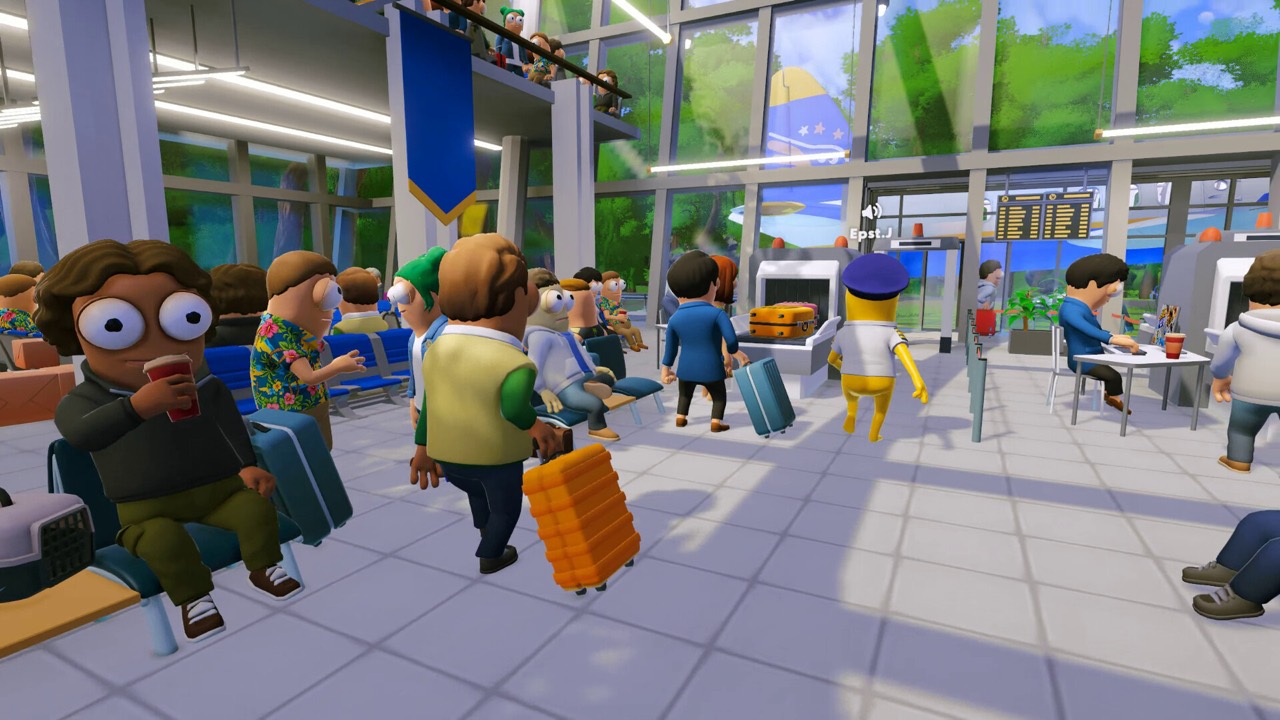
Dear Passengers is pitched around piloting, cabin work, passenger service, risky cargo, loose-object physics, weather, and online cooperation. Each recommendation overlaps with at least one of those systems.
The list is intentionally short. Adding more games would be easy, but most candidates would only share a broad label such as co-op, comedy, or survival. That would make the page less useful. These four are better because each one maps to a named part of the Dear Passengers pitch and has official store information that can be checked.
For the source-backed description of those systems, read the Dear Passengers gameplay guide.
Comparison limits
What this list cannot tell you yet
Dear Passengers is not publicly released, and its maximum player count, full progression, and public demo details remain unannounced. That prevents a complete feature-for-feature comparison or a hands-on verdict.
It also means this page should not score Dear Passengers against released games. There is no public build to measure, no review set to summarize, and no stable balance data. The comparison can help you choose what to play during the wait, but it cannot say whether FLEXUS's game will be easier, deeper, funnier, more replayable, or better supported than any of these released titles.
Learn more about the studio on the FLEXUS developer profile.
A label, not a genre
What does “friendslop” mean?
FLEXUS used the term in the title of its July 22 official teaser, so players searching for it deserve a plain explanation.
“Friendslop” is an informal, joking label for multiplayer games designed to produce funny stories with a group. The usual ingredients are easy-to-read goals, physical or procedural chaos, room for mistakes, and enough teamwork that one player's decision can change everyone else's run. The word can be affectionate or dismissive depending on who uses it. It is not an official Steam genre, a quality rating, or a fixed design specification.
Dear Passengers fits the useful part of that description because its official Steam copy puts friends inside one failing aircraft and gives them connected jobs. One player pilots while others work in the cabin, serve passengers, protect cargo, and respond to problems. Turbulence and air pockets can throw loose objects and people around. Those systems create shared consequences, which is the relevant comparison. The label does not tell us how deep progression will be, how difficult the simulation is, or how many players can join.
The four recommendations on this page split that broad appeal into concrete choices. Spacelines from the Far Out covers airline service. RV There Yet? covers a troublesome shared vehicle. PEAK covers approachable first-person physical teamwork. Barotrauma covers specialized crew jobs and cascading system failures. That is more useful than treating every popular co-op game as interchangeable.
FLEXUS's Dear Passengers — Another Friendslop Game teaser establishes that the studio is comfortable using the term for its own game. The GamesRadar interview with PEAK's studio gives wider context for how developers discuss the label. Neither source turns it into a technical category, so the comparisons here remain tied to named mechanics and official mode listings.
Source notes
Official listings checked for this comparison
Store pages can change. These mode and player details were checked on July 21, 2026.
- Spacelines from the Far Out on Steam: player range, solo, online co-op, and shared/split-screen support.
- RV There Yet? on Steam: four-player online co-op, shared RV, winch physics, and maintenance.
- PEAK on Steam: solo play, four-player online co-op, and first-person physics climbing.
- Barotrauma on Steam: single-player, online co-op for up to 16, six roles, repairs, and submarine systems.
Steam tags and descriptions are useful, but they are not perfect substitutes for playing the games. For this page, they are enough to verify basic mode support, listed player counts, settings, and officially described mechanics. They are not enough to compare netcode quality, late-game balance, accessibility depth, or how active each player community will be by the time Dear Passengers launches.
The Dear Passengers facts are held to the same standard. The page does not assume local co-op, crossplay, a maximum online player count, demo timing, or campaign structure for FLEXUS's game because those details are not confirmed in the sources used here. That keeps the recommendation useful without turning a waiting list into speculation.
Continue briefing
Read next
Compare the announced Dear Passengers mechanics or meet the studio making them.