Can you fly the plane in Dear Passengers?
Yes. Piloting is one of the confirmed crew roles.
Crew operations
Crew members pilot the aircraft or work inside the cabin, where passenger service, cargo choices, loose objects, turbulence, and escalating problems turn each trip into a physics-driven emergency.
Confirmed Dear Passengers combines flying with cabin management. Before takeoff, players choose passengers and cargo with different payouts and risks. During the flight, the crew serves passengers, protects cargo, handles disasters, and reacts to weather that throws loose objects around the aircraft. This page separates the public mechanics from interpretation; the shorter status ledger is kept in the confirmed features guide, and trailer-visible beats are tracked in the trailer breakdown.
The confirmed loop
The official description establishes a sequence, even though FLEXUS has not shown every menu or progression screen.
The important word is sequence. Dear Passengers is not presented as a single-room party game where every round starts with the same task. The Steam copy starts before takeoff, with passengers and cargo selected first, then moves into the flight itself. That matters because the official pitch ties early choices to later pressure: higher rewards can come with harder people or cargo to manage. FLEXUS has not published the exact payout math or promised that every lower-paying manifest is safer, but the risk-reward structure is explicit enough to treat manifest selection as part of the gameplay loop.
The other important word is crew. The public materials frame the aircraft as one shared problem. Cabin players deal with flight consequences, and the pilot flies a plane whose interior can become unstable. That shared-state design is also why this guide avoids unconfirmed role lists. Piloting and cabin work are confirmed; detailed job classes, skill trees, crew perks, and role-specific tools are not.
The extra hazard examples come from an attributed FLEXUS studio interview. FLEXUS gave them as examples, not as a complete list of hazards.
Cockpit
Piloting is a confirmed role. The official materials show first-person cockpit control, while the Steam description says other players can be working inside the cabin at the same time. That makes flying one part of a connected crew system rather than a separate minigame.
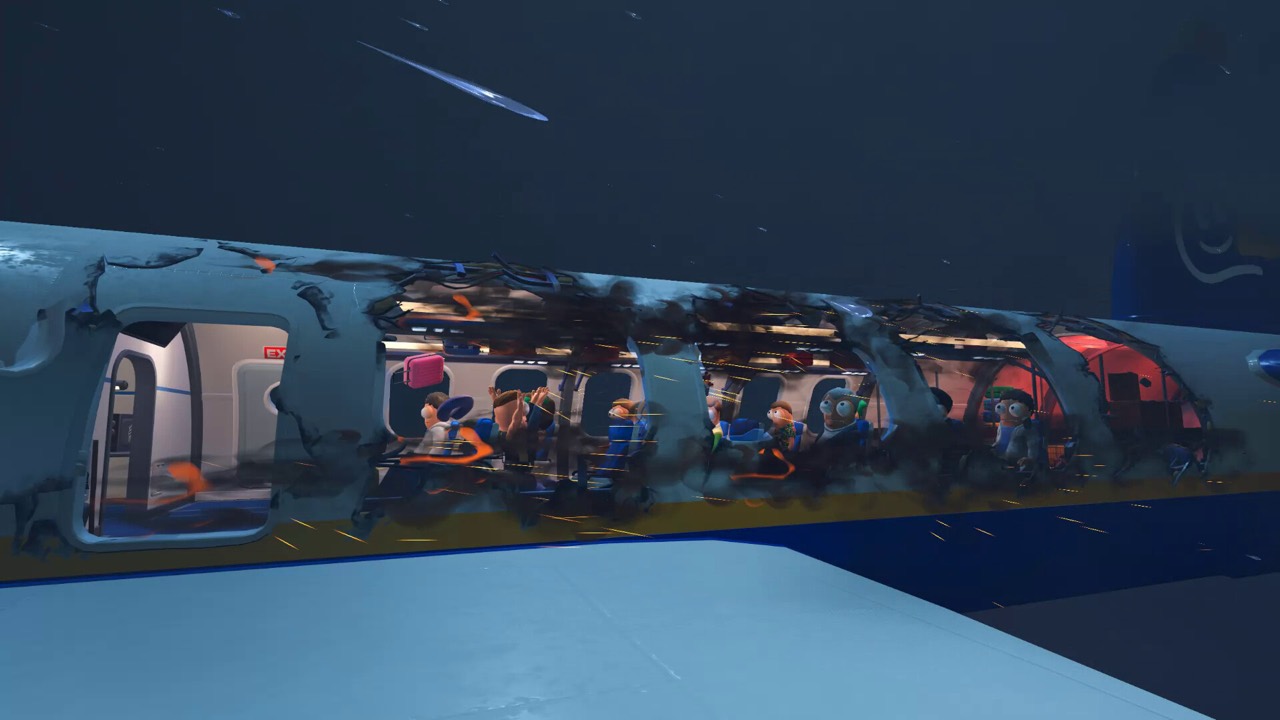
Weather matters to both sides of the aircraft. A turn, air pocket, or stretch of turbulence can disturb the people and objects behind the pilot. FLEXUS has not published a flight-model breakdown, list of controls, autopilot details, or realism settings.
Calling the game a full flight simulator would overstate what has been announced. Steam categorizes it as action, adventure, and indie, and the public pitch emphasizes cooperation and physical comedy.
What can be said safely is narrower: the pilot controls a moving aircraft in a game where motion has consequences inside the cabin. It does not prove checklists, radio procedures, fuel planning, route navigation, subsystem failures, or licensed cockpit instrumentation.
Cabin
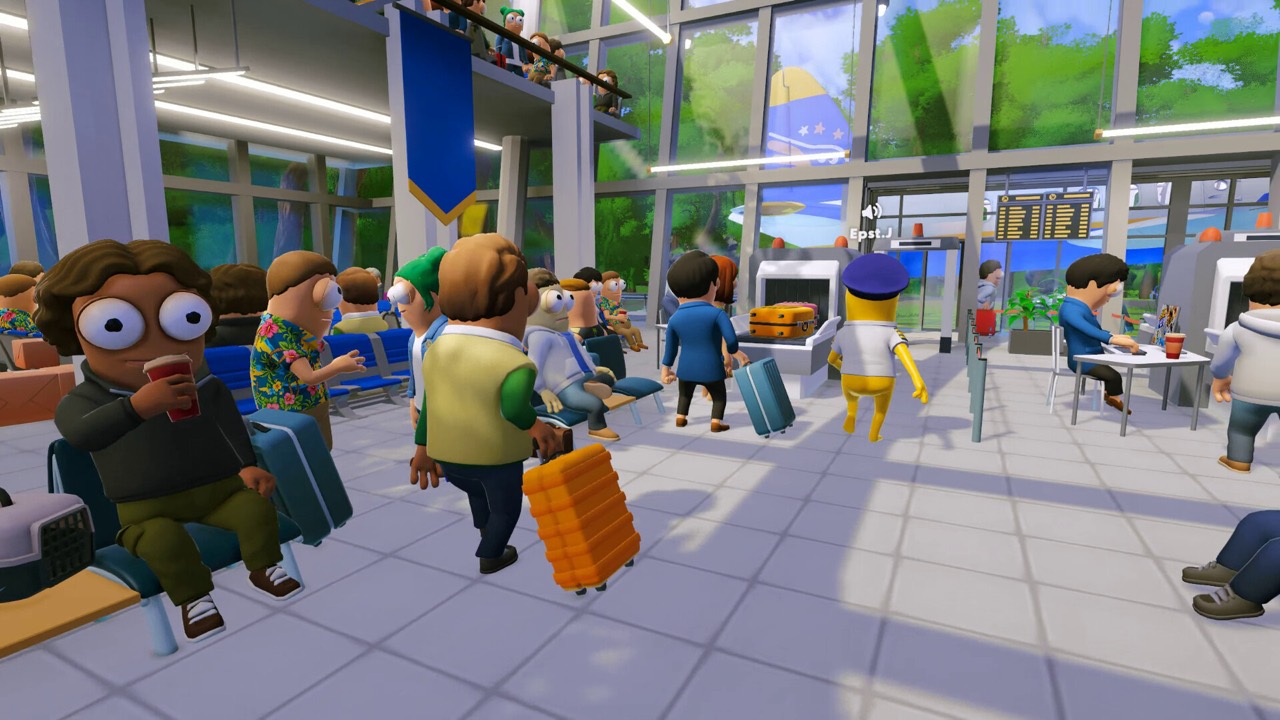
Cabin crew serve food and drinks, keep passengers under control, protect cargo, and respond when problems spread. The goal is to keep the flight running, even when the solution is messy.
Passengers, cargo, luggage, and cabin objects use physics. That means the state of the aircraft can alter ordinary service work. The current materials do not reveal individual passenger types, status effects, inventory limits, or a complete list of cabin tools.
Cabin work is where the service fantasy turns into crisis management. Serving passengers is confirmed, but the game is not only about handing out food and drinks. The official screenshots and descriptions show a cabin where objects can scatter, passengers can be displaced, and cargo can become part of the problem. A good cabin player therefore has two broad responsibilities in the confirmed design: meeting passenger expectations and keeping the aircraft interior from becoming unmanageable.
For the confirmed solo and online modes, see the multiplayer and player-count guide.
Risk and reward
Pre-flight selection is not just decoration: larger payouts are linked to harder-to-handle people or items.
The official description says the crew chooses which passengers and cargo to bring before takeoff. Some cargo is difficult to handle, and some passengers are difficult to satisfy. This creates a stated risk-versus-payout decision at the start of a flight.
FLEXUS has not detailed an economy, contract tiers, cargo categories, passenger traits, failure penalties, or how earnings are spent. The choices clearly trade risk for payout, but FLEXUS has not revealed enough to recommend an optimal manifest.
That distinction matters for guides. It is fair to say the manifest changes the difficulty profile of a flight, because FLEXUS says different passengers and cargo carry different risks and rewards. It is not fair to invent cargo classes, passenger archetypes, hidden modifiers, or a best route through the economy. Until FLEXUS publishes more, the practical takeaway is simple: pre-flight selection is a planning step, not just flavor text.
The same caution applies to cargo protection. The Steam description confirms that cargo can be valuable and risky, and public imagery supports the idea of unsecured cabin objects causing trouble. It does not confirm insurance systems, cargo damage percentages, theft, contraband categories, or a complete list of tie-down tools. If those systems are announced later, they belong in the confirmed feature register before they are treated as advice here.
Outside the manual
These are natural questions, but the current screenshots and store copy do not answer them.
| Campaign | Not announced No story length, run structure, or mission count. |
|---|---|
| Aircraft / routes | Not announced No confirmed number of planes, airports, or destinations. |
| Progression | Not announced No upgrade tree, unlock system, or persistent economy details. |
| Difficulty | Not announced No difficulty modes or accessibility assists described. |
| Mods | Not announced No Workshop or mod-support statement. |
| Post-launch | Not announced No roadmap or content plan. |
The unknowns are not minor footnotes. They are the difference between a hands-on strategy guide and a source-backed preview. A campaign structure would change how flights are connected. Aircraft and route counts would change replay expectations. Progression details would explain whether payouts buy upgrades, cosmetics, repairs, or something else entirely. Difficulty and accessibility settings would affect who can comfortably play. None of that has been confirmed in the public sources checked for this page.
For now, the safest reading is that Dear Passengers has a clearly announced core loop and a large set of unannounced surrounding systems. This guide will stay on that line: explain what FLEXUS has shown or said, label everything else as unknown, and avoid filling gaps with guesses copied from other co-op games.
Passenger questions
Short answers based on the official store description and trailer.
Yes. Piloting is one of the confirmed crew roles.
They serve passengers, protect cargo, and respond to problems during the flight.
Yes. Turbulence and air pockets can move passengers, luggage, and other loose objects.
Yes. Those choices happen before takeoff and involve different payouts and risks.
FLEXUS presents it as an action-adventure game with flight controls and physics-driven cabin management, not as a confirmed realistic simulator.
Continue briefing
Choose a crew duty, check the evidence, or compare other co-op chaos games.